
Bunny Care
Some basic information on how we raise our bunnies, and things we recommend to get to prepare for your bunny, clickable links!
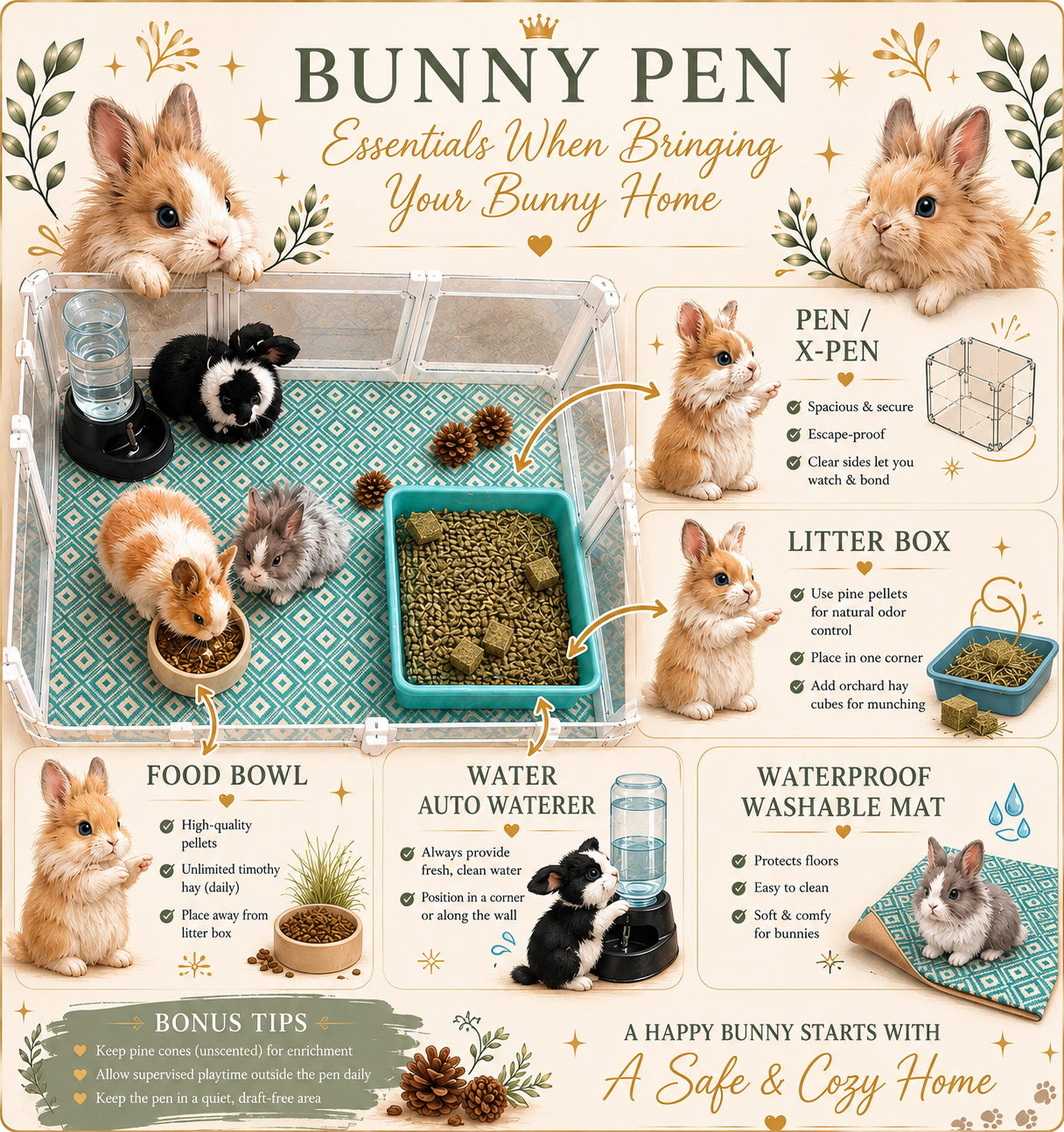
this includes:xpen with a litter box for indoor housing is recommended!
Outside, animal proof cages, if necessary.
Our bunnies are raised indoors and are about 90% litter box trained by the time they transition into their new homes. We feed alfalfa cubes and hay to both our young and adult rabbits, and our pellet mix consists of KalmBach pellets blended with black oil sunflower seeds—approximately 95% pellets and 5% BOSS.A healthy rabbit starts with a simple, consistent diet.
Each bunny should receive approximately ¼ cup of quality pellets daily, along with unlimited access to fresh hay. Hay is the foundation of a rabbit’s diet and should always be available 24/7 to support healthy digestion and dental health.
Many families ask about the difference between loose hay and hay cubes. Nutritionally, they are the same, hay cubes are simply compressed hay. We feed both cubes and loose hay, we also love our little hay holders, that we send with local pet families!
Our preferred hay choice is orchard grass hay, or alfalfa, which is both palatable and gentle on sensitive digestive systems.
While it can be tempting to spoil a new bunny with treats and vegetables, we strongly recommend waiting until at least 6 months of age before introducing them. A young rabbit’s digestive system is incredibly delicate, and too many treats or introducing them too soon, can lead to serious digestive upset, risking death. Once your bunny is mature, treats and vegetables should still be offered only in moderation.
One of the greatest gifts you can give your rabbit is consistency. Fresh water, unlimited hay, a measured amount of pellets, and lots of love will help your bunny thrive for years to come.


Bringing Your Boujie Bunny Home
The first few days in a new home are a big transition for a rabbit. Even the sweetest, most socialized bunny may need a little time to settle into their new surroundings, learn their new routine, and feel comfortable with their family.
The First Few Days
When your bunny first arrives home, give them a quiet, comfortable space where they can decompress and become familiar with their new environment. Keep handling gentle and relaxed, and allow your bunny to approach you at their own pace.
You may notice your bunny is a little quieter, more cautious, or less interested in being handled during the first few days. This is completely normal. Moving away from their littermates and familiar surroundings is a big change.
Sit nearby, talk softly, offer a favorite treat, and let them learn that you are a safe and positive part of their new environment.
Not Every Bunny Loves Being Held
One of the most important things to understand about rabbits is that not every rabbit enjoys being picked up and that doesn’t mean they aren’t affectionate.
Rabbits are prey animals, so being lifted off the ground can feel unnatural or even frightening to them. Many rabbits would much rather sit beside you, climb into your lap on their own, follow you around, or settle next to you while you pet them.
Some rabbits become true lap bunnies, happily relaxing in your lap once they trust you. Others prefer to sit beside you while receiving attention.
Both personalities are perfectly normal.
Building Your Bunny’s Trust
The best relationships develop through patience and positive experiences.
♡ Sit on the floor and allow your bunny to come to you.
♡ Offer small treats from your hand.
♡ Pet them gently while they are relaxed.
♡ Keep early handling short and positive.
♡ Avoid chasing or repeatedly picking them up when they are trying to get away.
♡ Give them time to learn your family’s voices, routines, and movements.
With patience, many rabbits become incredibly affectionate and seek out their people for attention.
A Boujie Bunny Is Raised for Family Life
Our babies are accustomed to everyday household sounds and activity, including children, televisions, vacuums, grooming, and our dogs. This early exposure helps them become familiar with the sights and sounds of a busy home before they leave our rabbitry.
But remember: socialization doesn’t create one specific personality.
Every rabbit is an individual.
Some will be outgoing from day one. Some will need a little more time to warm up. Some will want to sit in your lap, while others will happily sit beside you for hours.
Our goal isn’t to make every rabbit behave exactly the same. It’s to give each bunny the foundation to become a confident, trusting and loving companion in their own way.